
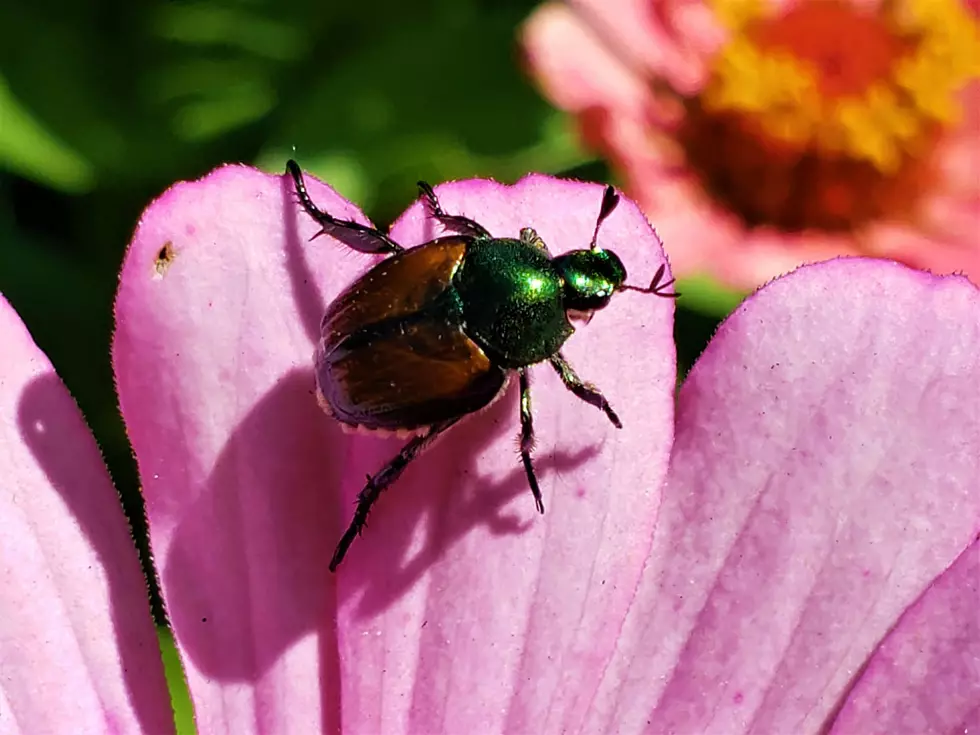
Oregon Stopping Its Fight Against The Japanese Beetle
It’s an invasive species that can cause a lot of damage to the farming community, but one the Beaver state is halting its fight against the Japanese Beetle.
For the past eight years, Oregon’s eradication program has been funded through one-time General Fund or Lottery Fund appropriations via the state Legislature, separate from the base budget for the Oregon Department of Agriculture. However, during this year’s legislative session, a bill to continue this funding did not pass, meaning the program will not be funded starting next year.
ODA announced Friday the department will not continue Japanese beetle eradication operations in 2026. In its announcement, ODA said efforts by local communities, Oregon Association of Nurseries, Oregon Invasive Species Council, resulted in a 92% decrease in the emergent population of Japanese Beetles.
The Department added through targeted treatments and widespread detection trapping, ODA prevented the beetles from spreading into new areas of the state - protecting Oregon’s agriculture, urban and forested areas. It is predicted that Japanese beetle will spread and become established in other parts of the state in the absence of continued treatment efforts.
Despite this, ODA is encouraging residents, landowners and farmers to continue efforts to slow the spread of this pest. The Department is urging everyone in or near the infested area to avoid moving outdoor potted plants or participating in plant swaps, as the beetles can easily hitch a ride in soil or plant material. Oregonians can also take green waste to facilities nearby their residence to avoid moving the beetle in yard debris to uninfested regions of Oregon. If you are interested in learning more about how to manage Japanese beetle on your property, ODA has produced a treatment information guide.
Japanese beetle Pest Status in Oregon
Over the past eight years, the Oregon Department of Agriculture has been working with local communities and city governments on a multi-year project to eradicate the Japanese beetles before they become established in Oregon. As of mid-September, ODA trapped 1,831 Japanese beetles in 2025, a 67% decrease from the number of beetles trapped in 2024. However, most of the catches (82%) were isolated to one farm. ODA finished the last treatments (~950 acres) for the program in May of 2025.
The Japanese beetle (Popillia japonica) continues to pose a significant pressure on Oregon and other western states. The largest infestation in Oregon was found in 2016 in the Cedar Mill, Bonny Slope, Oak Hills, and Bethany areas of Washington County. This invasive insect pest can be destructive in multiple life stages, causing damage to over 300 types of plants including roses, hops, grapes and a myriad of ornamental plants. If left unmanaged, the current population will continue to grow and spread to new areas within Oregon. Increased beetle populations lead to more pesticide use to protect crops and gardens.
How can I prevent the spread of Japanese beetle?
If you live in or near the infested area there are a couple of ways you can help limit the spread of Japanese beetle. The best way to help limit the spread of Japanese beetle currently is to ensure you are not moving any plant material, including outdoor potted plants, to new locations outside of Washington County. Also, please refrain from participating in any plant swaps if you are within the infested area. Japanese beetle can be moved in a variety of ways, including in potted plants. It is likely that the current population was introduced from a potted plant that was moved into the neighborhood from a Japanese beetle infested area outside of the state.
If you have a story idea for the PNW Ag Network, call (509) 547-1618, or e-mail glenn.vaagen@townsquaremedia.com
More From 610 KONA


